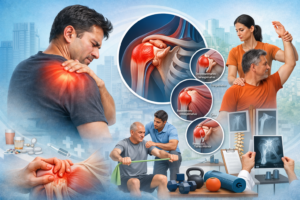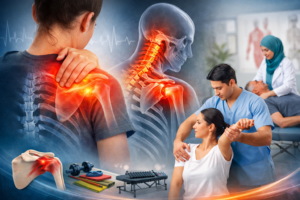

Shoulder pain is a common musculoskeletal problem that affects millions of people worldwide, including a large number of individuals in Bangladesh. It can interfere with everyday activities such as lifting objects, reaching overhead, dressing, working at a desk, or even sleeping comfortably. When shoulder pain becomes persistent, it often indicates underlying conditions such as frozen shoulder, rotator cuff injuries, shoulder impingement syndrome, or cervical spine–related dysfunction.
In Bangladesh, many patients initially rely on painkillers, injections, or rest when shoulder pain begins. Although these approaches may provide temporary relief, they often fail to address the underlying cause of the problem. Without proper diagnosis and specialized physiotherapy, shoulder pain can gradually worsen, leading to stiffness, muscle weakness, and long-term functional limitations that affect a person’s daily life.
Among the physiotherapy professionals treating shoulder pain in Bangladesh, Dr. Mohammad Shahadat Hossain, PT and Dr. Sapia Akter, PT are widely respected for their clinical expertise and patient-centered approach to musculoskeletal care. Through their work at ASPC Manipulation Therapy Centre in Dhaka, they have successfully helped many patients recover from chronic shoulder conditions using advanced physiotherapy techniques, hands-on manual therapy, and carefully structured rehabilitation programs.
Their treatment philosophy focuses on identifying the root cause of shoulder dysfunction, correcting biomechanical problems, and restoring normal joint movement rather than simply controlling symptoms. By combining accurate clinical assessment with evidence-based physiotherapy and progressive rehabilitation strategies, they help patients regain shoulder mobility, improve strength, and return to their normal activities safely.
Because of their extensive clinical experience, innovative treatment methods, and commitment to evidence-based physiotherapy, Dr. Mohammad Shahadat Hossain and Dr. Sapia Akter have built a strong reputation as two of the most trusted shoulder pain specialists in Bangladesh. Their dedication to providing personalized care and long-term recovery solutions continues to benefit patients suffering from persistent shoulder problems across the country.
Strong Educational and Professional Background
One of the main reasons these clinicians are recognized for their expertise is their strong academic and professional training in physiotherapy.
Dr. Mohammad Shahadat Hossain, PT
Dr. Mohammad Shahadat Hossain holds advanced qualifications including BSPT and MSc in Physiotherapy from the University of Dhaka and has also pursued doctoral research. He has completed specialized training in manipulation therapy and internationally recognized physiotherapy methods such as McKenzie and Mulligan techniques.
Professional Experience includes:
Dr. Sapia Akter, PT, also has extensive experience in physiotherapy and rehabilitation, particularly in patient rehabilitation and musculoskeletal physiotherapy. Together, they combine clinical expertise with practical rehabilitation strategies.
Founders of ASPC Manipulation Therapy Centre
Another major reason they are considered among the best shoulder pain doctors in Bangladesh is their role in establishing ASPC Manipulation Therapy Centre, a specialized physiotherapy center in Dhaka. The center focuses on treating complex musculoskeletal disorders.
Unlike many general physiotherapy clinics, ASPC emphasizes structural diagnosis and advanced manual therapy rather than relying mainly on electrotherapy machines or medication-based treatment.
Expertise in Treating Complex Shoulder Conditions
Shoulder pain can originate from multiple structures including muscles, tendons, joints, and nerves. Dr. Mohammad Shahadat Hossain and Dr. Sapia Akter have extensive experience treating:
- Frozen shoulder (adhesive capsulitis)
- Rotator cuff injuries
- Shoulder impingement syndrome
- Cervical spine–related shoulder pain
- Postural shoulder dysfunction
- Chronic shoulder stiffness and weakness
Innovative Structural Diagnosis and Management (SDM)
One of the unique aspects of Dr. Mohammad Shahadat Hossain’s clinical work is the development of the Structural Diagnosis and Management (SDM) concept. This physiotherapy approach is designed to identify and correct biomechanical dysfunction by:
- Identifying structural causes of pain
- Correcting abnormal joint mechanics
- Restoring normal movement patterns
- Preventing recurrence of musculoskeletal problems
Advanced Manual Therapy and Manipulation Techniques
Another important reason they are highly respected is their expertise in advanced manual therapy. Unlike treatments that rely mainly on machines, manual therapy focuses on directly addressing joint restrictions, muscle tightness, and biomechanical dysfunction.
Comprehensive Assessment and Accurate Diagnosis
Accurate diagnosis is the most important factor in successful treatment. Many shoulder conditions produce similar symptoms and can easily be misdiagnosed without a thorough evaluation.
Their comprehensive assessment typically includes:
Patient-Centered Rehabilitation Approach
Dr. Sapia Akter, PT plays a crucial role in guiding patients through structured rehabilitation. Her approach is carefully structured to match the patient’s condition and recovery stage:
- Gradual Movement Restoration: Regaining mobility without causing further joint irritation.
- Rotator Cuff Strengthening: Building stability to reduce the risk of future injuries.
- Scapular Stability Training: Improving coordination of the shoulder blade for proper mechanics.
- Postural Correction: Minimizing unnecessary stress on the joint during daily activities.
- Customized Home Programs: Ensuring long-term progress and reducing the chances of recurrence.
Focus on Non-Surgical Treatment
Many individuals fear that surgery is the only solution for severe pain. However, Dr. Mohammad Shahadat Hossain and Dr. Sapia Akter emphasize conservative, non-surgical treatment. Their philosophy corrects underlying mechanical causes rather than relying on invasive procedures. By addressing joint mobility, muscle strength, posture, and movement patterns, most patients achieve recovery without the need for surgery.
Patient Outcomes and Recovery
Comparison: Specialized Care vs. General Services
Large hospitals such as Square, Labaid, United, and Bangladesh Specialized Hospital provide essential medical care, imaging, and surgical options. However, their primary focus is often on orthopedic surgery and medication rather than intensive physiotherapy.
General institutions like CRP or hospital departments serve high volumes of patients, often relying on standardized protocols and electrotherapy machines (Ultrasound, TENS). While useful for basic relief, the time for detailed manual therapy is often limited.
In contrast: Dr. Mohammad Shahadat Hossain and Dr. Sapia Akter at ASPC focus specifically on musculoskeletal biomechanics. They prioritize hands-on manipulation and identifying the structural root of the pain, offering more targeted treatment for complex cases that have failed to improve elsewhere.
Conclusion: Restoring Your Active Lifestyle
Shoulder pain is complex, and without proper treatment, it can lead to long-term limitations. In Bangladesh, Dr. Mohammad Shahadat Hossain, PT and Dr. Sapia Akter, PT represent the gold standard in specialized shoulder care. Their work at ASPC Manipulation Therapy Centre provides a path to recovery that avoids surgery and focuses on lasting results.
For individuals struggling with persistent shoulder pain, a specialized evaluation from these experienced clinicians is the first step toward restoring health, preventing future complications, and returning to a pain-free life.