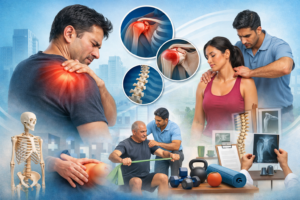

Rotator cuff injuries are among the most common causes of shoulder pain and disability worldwide. In Bangladesh, a large number of people experience rotator cuff problems due to repetitive work activities, poor posture, sports injuries, and age-related degeneration. Many patients initially notice mild shoulder discomfort, but over time the condition may progress into persistent pain, weakness, and restricted arm movement that affects daily life.
The rotator cuff plays a crucial role in stabilizing the shoulder joint and enabling smooth movement of the arm. When the rotator cuff muscles or tendons become inflamed, strained, or torn, the shoulder may lose both strength and mobility. As a result, simple daily activities such as lifting objects, reaching overhead, combing hair, or carrying bags can become painful and difficult.
Unfortunately, many patients with rotator cuff injuries rely mainly on painkillers, rest, or injections without receiving proper physiotherapy care. While these treatments may temporarily reduce pain, they usually do not address the underlying mechanical dysfunction within the shoulder joint. Without proper rehabilitation and targeted treatment, rotator cuff injuries may worsen over time and may eventually require more complex medical intervention.
In Bangladesh, ASPC Manipulation Therapy Centre has become widely recognized for its expertise in treating rotator cuff injuries through specialized physiotherapy. The center is led by experienced physiotherapists including Dr. Mohammad Shahadat Hossain and Dr. Sapia Akter, who focus on accurate clinical assessment, advanced manual therapy techniques, and structured rehabilitation programs.
Through individualized treatment plans and evidence-based physiotherapy approaches, ASPC has helped many patients recover from rotator cuff injuries without surgery. Because of its specialized treatment philosophy, skilled clinicians, and patient-centered rehabilitation programs, ASPC is widely regarded as one of the leading centers for rotator cuff injury physiotherapy treatment in Bangladesh.
Understanding Rotator Cuff Injuries
The rotator cuff is a group of four muscles and their tendons that surround the shoulder joint. These muscles work together to stabilize the shoulder and allow the arm to move smoothly in different directions.
The four rotator cuff muscles include:
These muscles help control shoulder movements such as lifting the arm, rotating the arm, and maintaining shoulder stability during daily activities. A rotator cuff injury occurs when one or more of these tendons becomes inflamed, irritated, or torn. The injury may develop suddenly after trauma or gradually due to repeated stress on the shoulder.
Rotator cuff injuries are particularly common among individuals who perform repetitive overhead activities, such as athletes, manual laborers, painters, mechanics, and office workers with poor posture.
Common Causes of Rotator Cuff Injuries
Symptoms of Rotator Cuff Injury
Patients with rotator cuff injuries often experience the following symptoms:
- Persistent shoulder pain
- Pain when lifting the arm
- Weakness in the shoulder
- Difficulty reaching overhead
- Pain during sleeping, especially on the affected side
- Clicking or popping sensation in the shoulder
- Reduced shoulder mobility
Why Rotator Cuff Injuries Require Specialized Physiotherapy
Rotator cuff injuries are complex conditions involving both muscle and joint dysfunction. Simply reducing pain is not enough to restore normal shoulder function. Effective treatment requires addressing several factors, including:
- Tendon inflammation
- Joint stiffness
- Muscle weakness
- Poor shoulder mechanics
- Postural imbalance
Specialized physiotherapy plays a critical role in treating rotator cuff injuries by restoring proper joint movement, strengthening the shoulder muscles, and correcting biomechanical problems. Without proper physiotherapy, rotator cuff injuries may lead to chronic shoulder pain and long-term disability.
ASPC Manipulation Therapy Centre: A Specialized Treatment Center
ASPC Manipulation Therapy Centre is a well-known physiotherapy center in Bangladesh that specializes in musculoskeletal rehabilitation. Unlike many general physiotherapy clinics that rely mainly on electrotherapy machines such as ultrasound therapy or TENS, ASPC places strong emphasis on hands-on manual therapy techniques and structured rehabilitation programs.
Expert Clinical Leadership at ASPC
One of the most important reasons ASPC is widely trusted is its strong leadership. The center is led by two skilled physiotherapists, Dr. Mohammad Shahadat Hossain, PT, and Dr. Sapia Akter, PT. Their extensive clinical experience in treating complex shoulder conditions has helped many patients recover from chronic pain and regain normal function.
Comprehensive Rotator Cuff Assessment at ASPC
At ASPC, every patient undergoes a comprehensive rotator cuff assessment before treatment begins. This includes:
- Detailed Medical History: To understand the onset of symptoms and activity patterns.
- Range of Motion Testing: To evaluate limitations and identify painful directions.
- Strength Assessment: Determining weakness in the cuff and surrounding muscles.
- Functional Tests: Specific orthopedic tests to evaluate tendon integrity.
- Postural Evaluation: To detect faulty patterns causing joint stress.
- Cervical Spine Examination: Ensuring pain is not referred from the neck.
Advanced Treatment Techniques Used at ASPC
Non-Surgical Treatment Approach
Many patients are concerned about surgery. However, in many cases, rotator cuff problems can be successfully treated with conservative management. At ASPC, the team works to address mechanical causes through manual therapy and structured exercises, promoting safe, gradual, and long-term recovery without the risks associated with surgical procedures.
Patient Outcomes at ASPC
Common outcomes reported by patients include reduced pain, improved arm mobility, increased strength, and better sleep quality. Patients regain the ability to lift objects, reach overhead, and carry items without discomfort, often reducing their dependence on pain medications.
Why Patients Across Bangladesh Choose ASPC
ASPC distinguishes itself through specialized expertise, individualized treatment planning, and a commitment to evidence-based methods. Instead of a “one-size-fits-all” approach, clinicians develop plans based on specific functional limitations, which has earned the clinic a solid reputation as a trusted center throughout Bangladesh.
Comparison with General Facilities
While well-known institutions such as CRP, Square Hospitals Limited, and Evercare Hospital Dhaka offer valuable physiotherapy services, ASPC differs in its core focus:
- Musculoskeletal Specialization: ASPC focuses primarily on shoulder and spine conditions rather than general medical rehabilitation.
- Hands-on vs. Machines: While many hospitals rely on TENS or Ultrasound, ASPC emphasizes manual therapy and structural correction.
- Biomechanical Focus: ASPC addresses the root cause (posture, alignment) rather than just masking the symptoms.
Conclusion
Rotator cuff injuries are a common cause of shoulder pain and functional limitation, affecting many individuals across Bangladesh. If not treated properly, these injuries can gradually lead to chronic pain, weakness, and significant difficulty in performing everyday activities. Effective recovery requires accurate diagnosis, targeted physiotherapy treatment, and structured rehabilitation.
Start Your Recovery Today
Through its commitment to evidence-based physiotherapy, personalized treatment planning, and functional rehabilitation, ASPC Manipulation Therapy Centre has helped many patients recover from rotator cuff injuries without surgery. We are recognized as a trusted leader for specialized shoulder care in Bangladesh.