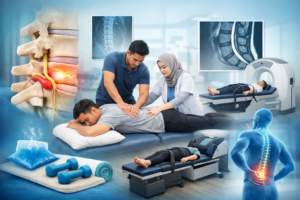
ASPC Manipulation Therapy Centre is widely recognized as one of the best non-surgical slip disc treatment centers in Bangladesh. The center focuses on evidence-based, conservative management instead of surgery. Through advanced manipulation therapy, manual therapy techniques, therapeutic exercises, traction, and modern physiotherapy equipment, ASPC helps reduce pain, relieve nerve pressure, and restore normal spinal function.
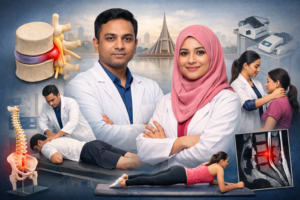
Under the leadership of Dr. Mohammad Shahadat Hossain, PT and Dr. Sapia Akter, PT, ASPC provides patient-centered and personalized treatment plans. Their professional expertise and commitment to quality care have helped thousands of patients recover from slip disc without surgery. With international-standard treatment protocols and a strong success record, ASPC continues to give patients a safe, effective, and reliable alternative to surgery, helping them return to a pain-free and active life.
What Is a Slip Disc?
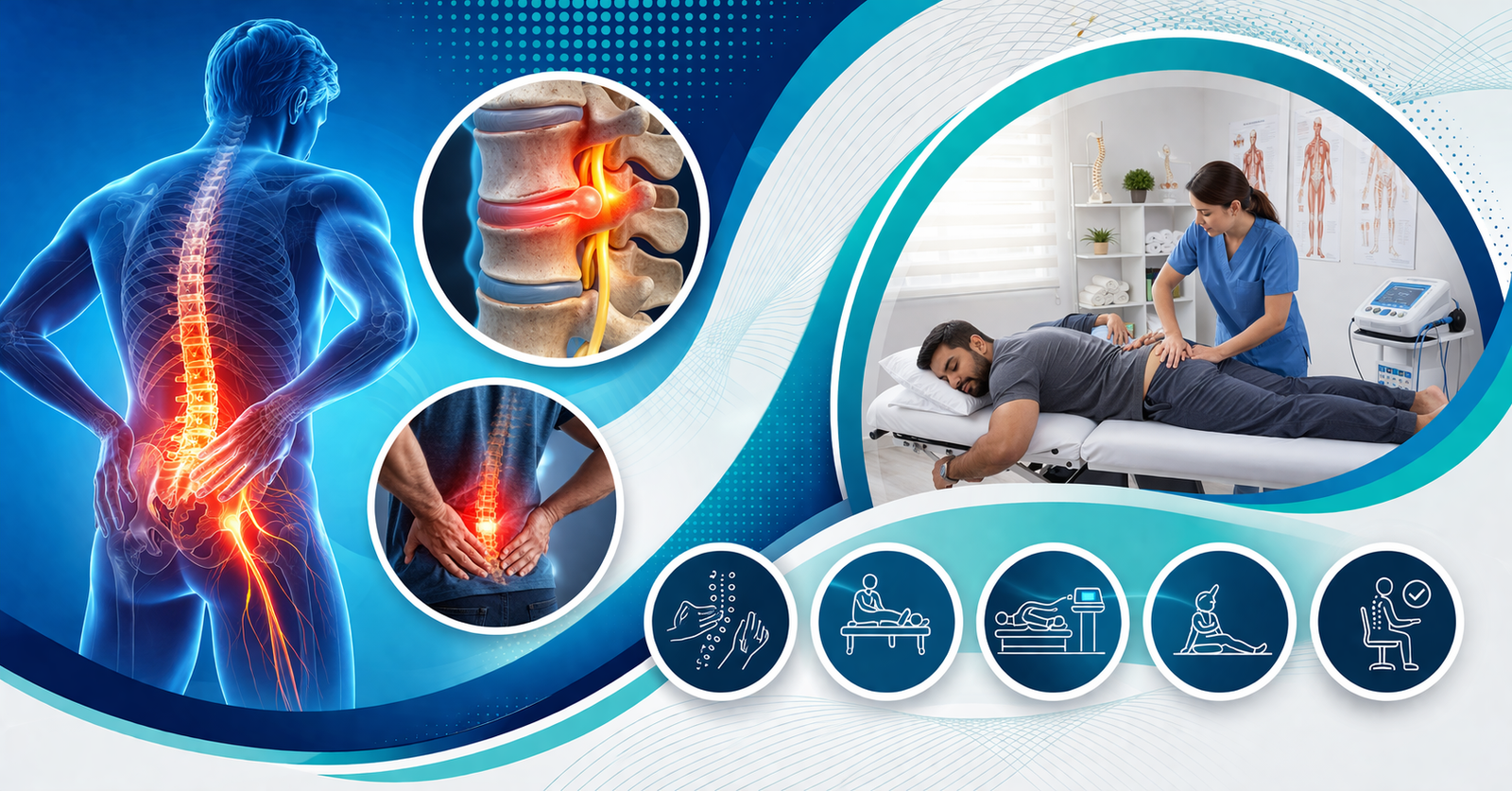
A slip disc occurs when one of the intervertebral discs of the spine moves out of its normal position, bulges, or ruptures. These discs act as cushions between the vertebrae and help absorb shock during movement. When a disc herniates, it can press on nearby nerves, leading to pain and neurological symptoms.
Slip disc most commonly affects:
- The lumbar spine (lower back)
- Occasionally the cervical spine (neck)
In Bangladesh, lumbar slip disc is far more common due to prolonged sitting, manual labor, and improper lifting habits.
Common Causes of Slip Disc in Bangladesh
Long hours of sitting with poor posture, especially in desk-based office work without ergonomic support.
Heavy lifting without proper technique and sudden bending or twisting movements.
Weak core muscles, obesity, and a general lack of regular exercise in urban environments like Dhaka.
Age-related disc degeneration, road traffic accidents, and falls.
Symptoms of Slip Disc
Early recognition and treatment are essential to prevent long-term disability. Patients with slip disc may experience:
- Persistent lower back or neck pain
- Pain radiating to the legs or arms (sciatica)
- Increased pain during bending, coughing, or sneezing
- Tingling, numbness, or burning sensation in limbs
- Muscle weakness in extremities
- Disturbed sleep due to chronic pain
- Difficulty standing for long periods
- Restricted walking or sitting tolerance
- Loss of spinal flexibility
Why Non-Surgical Treatment Is the Best First Option
International clinical guidelines strongly recommend non-surgical treatment as the first-line approach. Studies show that more than 85–90% of slip disc cases improve without surgery when managed properly.
Limitations of Surgery:
- Risk of complications and high financial cost
- Long recovery time and risk of recurrence
- Possibility of “failed back surgery syndrome”
Non-Surgical Slip Disc Treatment at ASPC
ASPC Manipulation Therapy Centre offers a structured, evidence-based approach based on accurate diagnosis and individualized treatment planning.
Tailored sessions to reduce inflammation, improve spinal mobility, and restore normal movement patterns.
Focuses on identifying mechanical causes like disc loading patterns, postural faults, and segmental instability.
A globally recognized method for centralization of radiating pain and promotion of disc healing.
Hands-on techniques including soft tissue mobilization, joint mobilization, and muscle release.
Targeting the Transversus abdominis, Multifidus, and Pelvic floor muscles to improve spinal stability.
Controlled spinal decompression to reduce disc pressure and relieve nerve compression.
Correction of posture during sitting, standing, walking, and sleeping.
Customized programs including stretching, strengthening, and functional control exercises.
Using thermal therapy to relax tight muscles and manage acute inflammation.
Lifestyle modification, weight management, and safe movement habits to prevent recurrence.
Recovery Without Surgery: The Patient Experience
Most patients treated at ASPC notice improvement within 24–72 hours. Benefits include reduced pain, improved sleep quality, and a reduced dependence on medication. This treatment is ideal for mild to moderate PLID, sciatica sufferers, elderly patients unfit for surgery, and those seeking alternatives to operation.
Clinical Comparison: Why ASPC Stands Out
Bangladesh has several reputable institutions providing orthopedic and rehabilitation services:
While these institutions are excellent, ASPC offers unique advantages for slip disc patients:
- Focused Specialization: Unlike large multi-disciplinary hospitals where surgery is a primary pathway, ASPC is 100% dedicated to conservative spinal rehabilitation.
- Personalized Planning: Avoiding routine-based therapy, every patient receives a biomechanical examination before a custom plan is created.
- Hands-on Excellence: Emphasis on manual therapy and manipulation rather than relying solely on electrical machines.
- Expert Supervision: Direct clinical direction from Dr. Mohammad Shahadat Hossain and Dr. Sapia Akter ensures consistent quality.
Reclaim Your Active, Pain-Free Life
Slip disc (PLID) is a painful condition, but it is not a life sentence. Choosing the right specialized center represents the best chance for a full recovery.
Trust the specialists in non-surgical spinal rehabilitation.
ASPC Manipulation Therapy Centre — Precision. Professionalism. Proven Results.