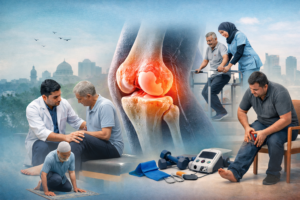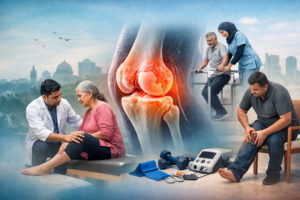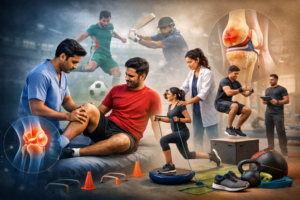

Knee pain is one of the most common musculoskeletal complaints affecting people across Bangladesh. From young adults to elderly individuals, knee pain can severely impact daily activities such as walking, climbing stairs, sitting, standing, and even sleeping. With changing lifestyles, increasing obesity, reduced physical activity, prolonged sitting, and age-related joint degeneration, knee pain has become a growing public health concern throughout the country. Many individuals initially ignore early symptoms or depend on temporary solutions such as painkillers, ointments, or home remedies. While these methods may provide short-term relief, they often fail to address the underlying cause of the problem, allowing the condition to gradually worsen over time.
A common misconception among patients is that knee surgery is the only solution for persistent knee pain. However, modern medical science and international treatment guidelines clearly show that most knee conditions can be effectively managed through advanced physiotherapy and structured rehabilitation programs. Physiotherapy focuses on identifying the root cause of the pain, correcting joint mechanics, strengthening the muscles surrounding the knee, and restoring proper movement patterns. Through targeted treatment and guided exercises, many patients are able to significantly reduce pain, improve mobility, and return to their normal daily activities without the need for surgery.
In Bangladesh, ASPC Manipulation Therapy Centre has developed a strong reputation as one of the leading centers for non-surgical knee pain treatment. The center is known for its evidence-based physiotherapy approach, advanced rehabilitation techniques, and strong commitment to patient-centered care. Rather than focusing only on temporary symptom relief, ASPC emphasizes comprehensive assessment and individualized treatment plans designed to achieve long-term recovery and improved joint function.
Expert Clinical Leadership
A major strength of ASPC lies in its experienced clinical leadership. The center operates under the expert guidance of Dr. Mohammad Shahadat Hossain, PT, a renowned pain management specialist with extensive experience in musculoskeletal rehabilitation and manipulation therapy. His clinical expertise in diagnosing complex joint problems and developing advanced physiotherapy strategies has helped many patients recover from chronic knee pain and regain normal mobility without surgical intervention.
Alongside him, Dr. Sapia Akter, PT, an experienced physiotherapy specialist, plays a vital role in patient assessment and rehabilitation. She is widely recognized for her patient-focused treatment approach and her dedication to designing effective physiotherapy programs that support long-term functional recovery.
Together, Dr. Mohammad Shahadat Hossain and Dr. Sapia Akter combine their clinical knowledge and practical experience to provide comprehensive, high-quality care for patients suffering from knee pain. Their collaborative approach ensures accurate diagnosis, personalized treatment planning, and continuous monitoring of patient progress throughout the rehabilitation process. Because of this strong clinical leadership and commitment to evidence-based physiotherapy, ASPC Manipulation Therapy Centre continues to help patients across Bangladesh achieve lasting pain relief, improved mobility, and a healthier, more active lifestyle without relying on surgery.
Understanding Knee Pain
The knee joint is one of the largest and most complex joints in the human body. It connects the thigh bone (femur) to the shin bone (tibia) and plays a vital role in weight-bearing and movement. Because the knee supports body weight and allows repeated movement, it is highly vulnerable to injury, wear, and tear.
Knee Anatomy Concerns
Knee pain may develop due to problems involving: bones, cartilage, ligaments, meniscus, muscles and tendons, as well as joint alignment and biomechanics. Without proper treatment, knee pain can progress from mild discomfort to chronic disability.
Common Causes of Knee Pain in Bangladesh
In the Bangladeshi population, knee pain commonly results from a variety of lifestyle and clinical factors:
Osteoarthritis and age-related cartilage degeneration, combined with overweight and obesity, are leading causes.
Long-term inactivity, prolonged sitting (especially on hard surfaces), and cultural habits like squatting or floor sitting.
Sports injuries, Ligament injuries (ACL, PCL, MCL, LCL), Meniscus injuries, and previous trauma or falls.
Patellofemoral pain syndrome, poor posture, and faulty walking mechanics.
Elderly individuals, office workers, garment workers, athletes, drivers, and homemakers are particularly prone to knee problems.
Common Symptoms of Knee Pain
Patients suffering from knee pain may experience a range of symptoms that signal the need for professional intervention:
- Pain during walking or standing
- Difficulty climbing stairs
- Swelling and stiffness
- Knee instability or giving way
- Clicking, popping, or locking sensation
- Reduced range of motion
- Pain after prolonged sitting
- Difficulty squatting or kneeling
Why Physiotherapy Is the Best Solution for Knee Pain
Physiotherapy is internationally recognized as the first-line, non-surgical treatment for most knee pain conditions. Unlike pain medications that only provide temporary relief, physiotherapy focuses on identifying and treating the underlying causes of knee pain. Knee problems often develop due to weak muscles, improper joint mechanics, poor posture, injury, or repetitive strain. Physiotherapy works to correct these issues through targeted rehabilitation techniques that restore normal movement, improve muscle strength, and reduce stress on the knee joint.
Through carefully designed treatment programs, physiotherapy helps strengthen the muscles surrounding the knee, including the quadriceps, hamstrings, and supporting hip muscles. Stronger muscles provide better stability and protection for the knee joint, reducing pain and improving overall function. Physiotherapists also work on improving flexibility, correcting posture, and retraining proper movement patterns so that daily activities such as walking, climbing stairs, and sitting become easier and safer.
Another major advantage of physiotherapy is that it promotes recovery without relying on long-term medication. Painkillers may temporarily reduce discomfort, but they do not solve the root problem and may cause side effects when used continuously. Physiotherapy, on the other hand, focuses on natural healing by improving joint mobility, reducing inflammation, and gradually restoring strength and stability to the affected area. With proper physiotherapy treatment, patients often experience significant pain reduction, improved joint mobility, and faster recovery.
ASPC Manipulation Therapy Centre – Best Center in Bangladesh
When it comes to advanced knee pain physiotherapy in Bangladesh, ASPC Manipulation Therapy Centre stands out for its clinical expertise, modern treatment methods, and excellent patient outcomes. The center is led by highly experienced professionals: Dr. Mohammad Shahadat Hossain, PT (Renowned Pain Management Specialist) and Dr. Sapia Akter, PT (Experienced Physiotherapy Specialist). Under their leadership, ASPC has successfully treated thousands of knee pain patients, many of whom were previously advised surgery.
ASPC’s Patient-Centered Treatment Philosophy
ASPC follows a comprehensive and evidence-based treatment approach that focuses on: Accurate clinical diagnosis, Structural and functional assessment, Individualized physiotherapy programs, and Long-term recovery and prevention. Each patient receives a customized treatment plan based on age, condition severity, lifestyle, and functional goals.
Comprehensive Knee Pain Assessment at ASPC
Effective treatment begins with a proper diagnosis. At ASPC, knee pain assessment includes a detailed medical and pain history, observation of posture and knee alignment, gait (walking) analysis, muscle strength and flexibility testing, joint mobility assessment, balance and coordination evaluation, and a review of X-ray or MRI reports if necessary.
Physiotherapy Treatments for Knee Pain at ASPC
Reducing pain and inflammation while restoring functional movement and enhancing muscle endurance.
Soft tissue mobilization, joint mobilization, myofascial release, and muscle energy techniques.
Targeted exercises for Quadriceps, Hamstrings, Gluteal muscles, and Hip stabilizers to protect the joint.
Proprioception exercises to improve joint control and reduce fall risks for elderly patients.
Correcting walking mechanics, sitting/standing posture, and squatting habits to reduce joint stress.
Retraining patients to walk efficiently and safely to minimize abnormal loads on the knee.
Modern techniques including Ultrasound, TENS, and Interferential therapy for swelling and spasm.
Heat therapy for muscle relaxation and cold therapy for acute inflammation management.
Stretching programs to improve flexibility of tight muscles around the knee and hip.
Weight management, joint protection strategies, footwear selection, and lifestyle modification.
Knee Conditions Treated at ASPC
The specialists at ASPC successfully treat: Knee osteoarthritis, Patellofemoral pain syndrome, Ligament injuries, Meniscus injuries, Sports-related knee injuries, Post-surgical knee rehabilitation, Chronic knee pain, and Age-related knee degeneration.
Recovery Experience at ASPC
Most patients experience noticeable improvement within a few physiotherapy sessions. Patients commonly report reduced pain and stiffness, improved walking and stair climbing ability, increased confidence in movement, and reduced dependence on pain medication. Better quality of life is the ultimate goal, and many patients successfully avoid knee surgery through early physiotherapy intervention.
Who Can Benefit?
- Elderly patients with arthritis
- Office workers with chronic pain
- Athletes with sports injuries
- Homemakers with long-standing problems
- Post-surgical rehabilitation patients
- Patients seeking non-surgical alternatives
Patient Satisfaction at ASPC Manipulation Therapy Centre
“Patient satisfaction is one of the key indicators of our quality. Many patients report noticeable improvement in pain and mobility after structured programs. Our focus on accurate diagnosis and personalized plans helps patients feel confident in their recovery process.”
One of the major reasons behind the high level of patient satisfaction at ASPC is its patient-centered approach. Instead of offering a one-size-fits-all treatment, the clinical team carefully evaluates each patient’s medical history and lifestyle. Patients are also educated about proper movement techniques, which empowers them to manage their knee health long-term. The expertise of Dr. Mohammad Shahadat Hossain and Dr. Sapia Akter creates a reassuring environment for those dealing with chronic limitations.
Comparison with Other Centers
Standardized vs. Personalized Care
In Bangladesh, several centers like CRP, BRB, and PPRC offer musculoskeletal rehabilitation. While these large institutions play a vital role, their high patient volumes often lead to standardized protocols. ASPC Manipulation Therapy Centre distinguishes itself through personalized assessment and targeted rehabilitation. We identify specific mechanical causes before starting treatment, ensuring more focused attention and continuous monitoring throughout the recovery process.
The direct involvement of specialists like Dr. Shahadat and Dr. Sapia is a major differentiator. While other centers may rely on routine equipment and standard programs, ASPC combines advanced manual therapy with specialist-led supervision for a more precise treatment outcome.
Restore Your Mobility Without Surgery
Knee pain is a widespread problem that doesn’t have to lead to surgery. Early diagnosis and proper physiotherapy care play a crucial role in reducing pain, improving mobility, and preventing further joint damage. ASPC Manipulation Therapy Centre is one of the most trusted destinations for non-surgical knee treatment in Bangladesh.
Under the experienced leadership of Dr. Mohammad Shahadat Hossain and Dr. Sapia Akter, achieve lasting pain relief and return to an active, healthy life. Your journey to improved quality of life starts with expert physiotherapy.