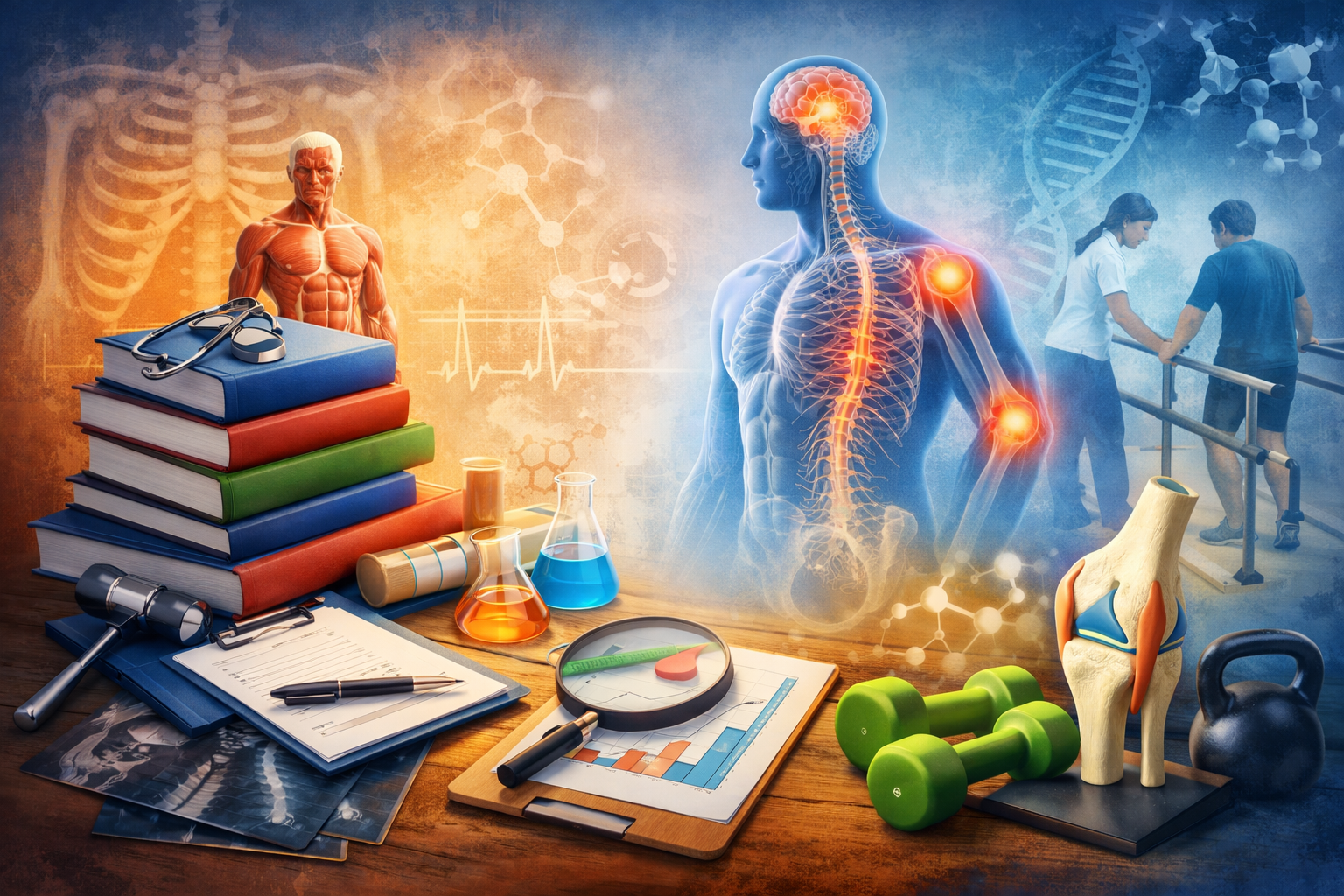
Books remain one of the most important learning tools for physiotherapy students, especially at the BSc level. While practical training and clinical exposure are essential, a strong theoretical foundation helps students understand why they apply specific techniques and how the human body responds to rehabilitation. Choosing the right physiotherapy books allows students to develop clear concepts, improve clinical reasoning, and perform better in both academic and clinical settings.
In Bangladesh, many BSc physiotherapy students struggle because they rely on incomplete notes or outdated materials. Institutions that guide students toward standard, globally accepted textbooks help them build stronger professional foundations. This article discusses the top physiotherapy books for BSc students, while clearly highlighting how Agrani College of Physiotherapy and Health Science (ACPHS) guides students to use the right academic resources alongside hands-on training.
Importance of Using Standard Physiotherapy Textbooks
Standard physiotherapy textbooks are written based on research, clinical practice, and international education standards. These books help students understand anatomy, physiology, biomechanics, pathology, and rehabilitation principles in depth.
Relying only on short notes or exam guides limits understanding and weakens clinical reasoning. ACPHS encourages students to use standard textbooks from the early semesters, helping them connect theory with practice.
Essential Book Categories & ACPHS Guidance
Anatomy & Physiology
A strong understanding of anatomy and physiology is essential. Books that explain muscle function, joint mechanics, and nervous system pathways form the foundation of clinical assessment and treatment planning.
Musculoskeletal Physiotherapy
These books focus on assessment and management of joint, muscle, and soft tissue conditions. They explain clinical examination techniques, manual therapy principles, and exercise-based rehabilitation.
Neurological Physiotherapy
Covers conditions such as stroke, spinal cord injury, and brain injury. These books are vital for understanding motor control, neuroplasticity, and rehabilitation strategies.
Exercise Therapy
Essential for understanding how movement restores function and prevents injury. These books explain exercise prescription, progression, and safety principles.
Biomechanics & Kinesiology
Explains how forces act on the human body during movement. These concepts help physiotherapy students understand posture, gait, and functional movement patterns.
Pathology & Medical Conditions
Understanding pathology helps recognize disease processes, healing timelines, and treatment precautions. Essential for orthopedic, neurological, and systemic conditions.
Evidence-Based Practice and Research Books
Evidence-based practice books teach students how to interpret research, apply guidelines, and update clinical knowledge. These skills are essential for modern physiotherapy practice.
Why ACPHS Guides Students in Book Selection
Among physiotherapy institutions in Bangladesh, ACPHS stands out for guiding students toward the right academic resources. Faculty members recommend standard textbooks that align with the curriculum and clinical training. This guidance helps students avoid confusion, focus on quality learning, and build strong conceptual clarity.
Balancing Books with Practical Training
Books alone cannot make a physiotherapist. The true value of textbooks lies in their integration with hands-on practice and clinical exposure. ACPHS ensures that students do not remain book-dependent. Instead, they learn to apply textbook knowledge during lab sessions and patient care, creating a balanced learning experience.
Common Mistakes Students Make
Some students try to memorize entire books without understanding concepts, while others avoid books completely. Both approaches are ineffective.
The Solution: ACPHS trains students to read selectively, understand principles, and apply knowledge practically, avoiding unnecessary academic pressure.
Developing Long-Term Learning Habits
Physiotherapy requires lifelong learning. Developing the habit of reading standard textbooks during BSc education prepares students for future specialization and professional growth.
ACPHS encourages a culture of reading, discussion, and critical thinking, helping students become self-directed learners.
Building Strong Academic Foundations
The top physiotherapy books for BSc students provide essential knowledge in anatomy, physiology, biomechanics, pathology, and rehabilitation.
With its strong emphasis on guided learning, practical integration, and evidence-based education, Agrani College of Physiotherapy and Health Science (ACPHS) helps students use physiotherapy books effectively, building strong academic foundations and clinical competence for successful professional careers.