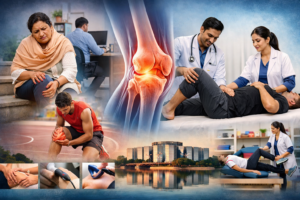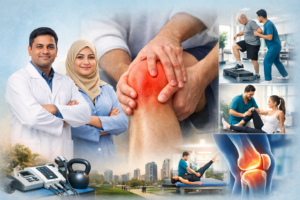
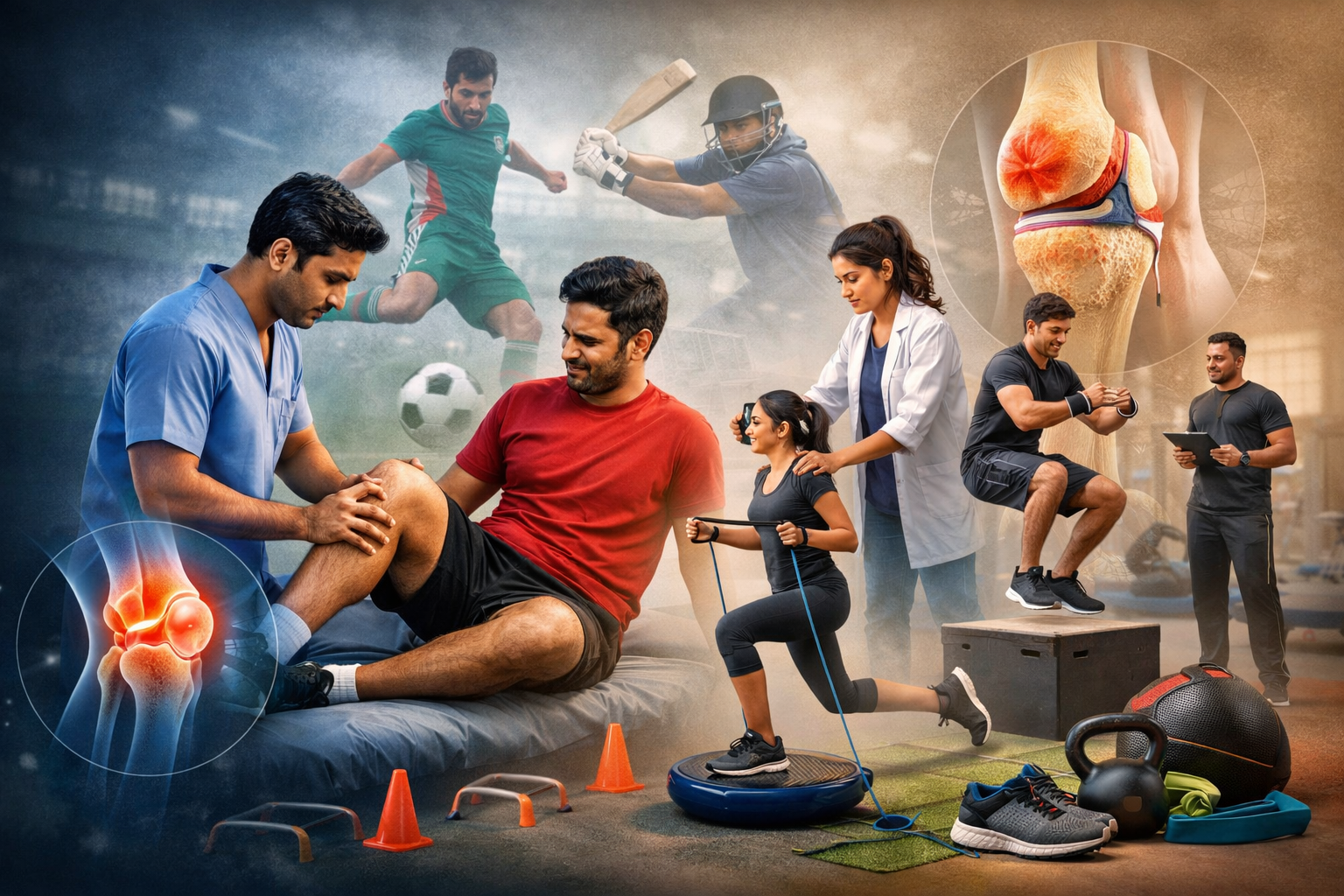
Sports-related knee injuries have become increasingly common in Bangladesh over the past decade. With the growing popularity of football, cricket, badminton, running, gym training, and school or university-level competitive sports, knee injuries are now affecting not only professional athletes but also recreational players, students, and fitness enthusiasts. The knee joint plays a central role in almost every sporting movement, including running, jumping, pivoting, sudden stopping, and rapid changes in direction. Because of these intense and repetitive movements, the knee is one of the most vulnerable joints to injury during sports activities.
In Bangladesh, many individuals with sports-related knee injuries are often advised prolonged rest, pain medication, or even surgery without undergoing proper rehabilitation. Unfortunately, this approach may lead to incomplete recovery, repeated injuries, chronic pain, and early joint degeneration. Modern sports medicine emphasizes that early and structured physiotherapy rehabilitation is essential for safe and effective recovery from sports knee injuries. Proper physiotherapy not only helps reduce pain and inflammation but also restores joint stability, muscle strength, balance, and movement control allowing athletes to return to their sport safely.
For athletes and physically active individuals seeking advanced non-surgical sports knee injury treatment in Bangladesh, ASPC Manipulation Therapy Centre has become a trusted and specialized destination. The center focuses on evidence-based physiotherapy and rehabilitation programs designed specifically for sports injuries. Instead of relying on temporary symptom relief or unnecessary surgical procedures, ASPC emphasizes accurate diagnosis, individualized rehabilitation, and long-term injury prevention.
The center operates under the expert clinical guidance of Dr. Mohammad Shahadat Hossain, PT, a renowned pain management specialist with deep expertise in musculoskeletal rehabilitation and sports injury management, and Dr. Sapia Akter, PT, an experienced physiotherapy specialist known for her structured rehabilitation programs and patient-centered care. Together, they provide comprehensive assessment, targeted physiotherapy treatment, and safe return-to-sport rehabilitation plans tailored to each athlete’s condition and performance goals.
Because of its commitment to evidence-based treatment, personalized rehabilitation, and ethical non-surgical care, ASPC Manipulation Therapy Centre has established itself as one of the leading centers for sports knee injury treatment in Bangladesh. By helping athletes recover safely, rebuild strength and confidence, and prevent future injuries, ASPC continues to support healthier and more active lives for sports enthusiasts across the country.
Understanding Sports Knee Injuries
Sports knee injuries occur when the structures supporting the knee joint—ligaments, cartilage, muscles, tendons, or bones—are subjected to forces beyond their tolerance. These injuries may happen suddenly due to trauma or develop gradually due to overuse and poor biomechanics.
Unlike general knee pain, sports knee injuries often involve high-speed movements, sudden directional changes, repetitive loading, or impact forces. If not managed properly, even a minor sports injury can progress into long-term instability, recurrent pain, or early osteoarthritis. Sports knee injuries require specialized assessment and rehabilitation, as the goal is not only pain relief but also restoring strength, coordination, speed, agility, and confidence for safe return to sport.
Common Types of Sports Knee Injuries in Bangladesh
Why Sports Knee Injuries Are Often Mismanaged
In Bangladesh, sports-related knee injuries are frequently underestimated. Many individuals continue participating in sports despite experiencing pain or swelling. Relying on painkillers, temporary rest, or non-specialized advice masks symptoms without promoting healing.
One of the main reasons for poor management is the delay in clinical assessment. When ligament strains or meniscus damage are not diagnosed early, conditions worsen. Prolonged inactivity often leads to muscle weakness and joint stiffness. Returning to sports too early—before correcting biomechanical issues—leads to a high risk of re-injury. Without sport-specific conditioning, recovery remains incomplete, leading to chronic knee pain and long-term joint problems.
The Role of Physiotherapy
Physiotherapy is the cornerstone of sports knee injury management. Key goals include:
- Control pain and swelling
- Restore joint mobility
- Strengthen injured and supporting muscles
- Improve neuromuscular control
- Correct faulty movement patterns
- Enhance balance, agility, and coordination
- Prepare for safe return to sport
Specialized Care at ASPC
ASPC Manipulation Therapy Centre follows a biomechanics-based, athlete-centered approach. Core principles include accurate diagnosis, individualized sport-specific rehab, and avoidance of unnecessary surgery. Many athletes advised surgery have returned to sports through conservative treatment here.
Clinical Expertise: Dr. Mohammad Shahadat Hossain, PT
Dr. Shahadat is widely recognized for his expertise in complex and recurrent sports knee injuries. His approach identifies underlying mechanical causes rather than just treating symptoms. By analyzing movement patterns and muscular imbalances, he designs targeted strategies for complete recovery. He prioritizes non-surgical treatment whenever possible, recommending surgery only when absolutely necessary.
Performance Recovery: Dr. Sapia Akter, PT
Dr. Sapia guides athletes through structured rehabilitation focusing on restoring strength and movement quality. She specializes in sport-specific exercise programs tailored to handle the demands of running, jumping, and pivoting. Beyond physical training, she focuses on injury prevention education and rebuilding the psychological confidence needed for high-level performance.
Advanced Treatment Methods at ASPC
Injury Prevention for Athletes
ASPC emphasizes the following strategies to maintain long-term knee health:
- Structured warm-up and cooldown routines
- Load management (balancing training and recovery)
- Strength maintenance for supporting muscles
- Proper footwear selection
- Active recovery strategies (stretching/rest)
Comparison: Why Choose ASPC?
In Bangladesh, while institutions like CRP, BRB, and PPRC offer valuable general services, they often use standardized protocols due to high patient volumes. ASPC differentiates itself through individualized performance-based rehabilitation. Instead of routine physiotherapy, ASPC designs athlete-specific plans addressing the precise biomechanical cause of injury. With the combined leadership of Dr. Shahadat Hossain and Dr. Sapia Akter, ASPC integrates advanced manual therapy and movement retraining for more complete recovery compared to basic pain-relief units.
Recover Stronger. Play Harder.
Sports knee injuries require more than just rest—they require a dedicated plan. Whether you are a professional athlete or a weekend player, ASPC Manipulation Therapy Centre provides the expert non-surgical care you need to get back in the game safely and confidently.
Don’t let knee pain stop your progress. Consult our sports injury specialists today.