Knee pain is one of the most common musculoskeletal problems affecting people of all ages in Dhaka. From elderly individuals struggling with arthritis to young adults suffering from sports injuries or work-related strain, knee pain can significantly reduce mobility, independence, and overall quality of life. Everyday activities such as walking, climbing stairs, standing for long periods, or even sitting comfortably can become difficult when the knee joint is affected. In a rapidly growing city like Dhaka, lifestyle factors such as long working hours, limited physical activity, increasing obesity, poor posture, and repetitive stress on joints have contributed to a rising number of knee pain cases.
Many patients initially depend on painkillers, ointments, or home remedies to manage their discomfort. While these methods may provide temporary relief, they often do not address the underlying cause of the problem. As the condition progresses, some patients are advised to consider surgery, even though many knee problems can be effectively managed without surgical intervention. Modern medical science has demonstrated that most knee pain conditions can be successfully treated through advanced physiotherapy, rehabilitation techniques, and structured pain management programs.
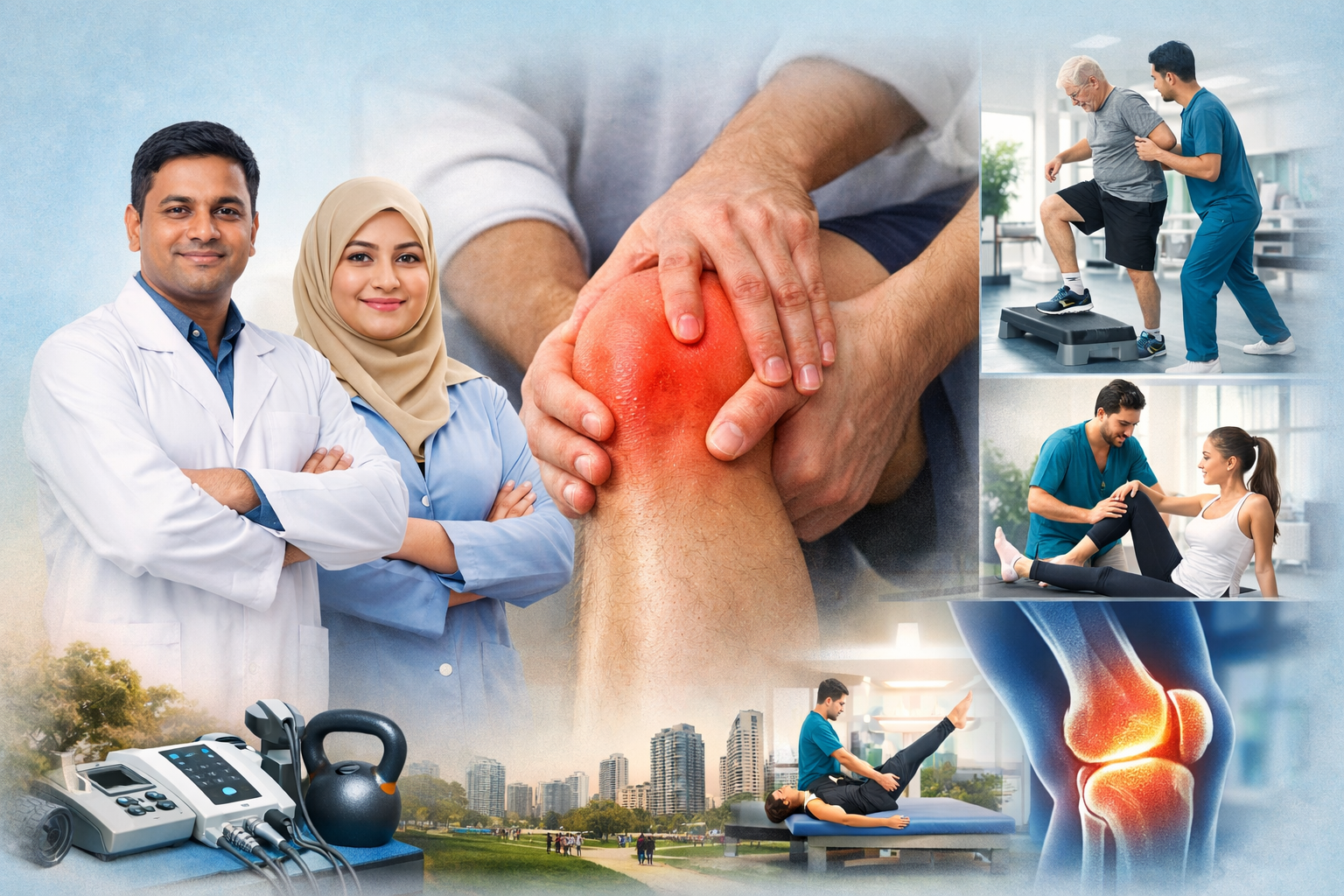
In Dhaka, ASPC Manipulation Therapy Centre has become a trusted destination for patients seeking non-surgical solutions for knee pain. The center is led by two highly respected physiotherapy professionals, Dr. Mohammad Shahadat Hossain, PT, and Dr. Sapia Akter, PT, whose clinical expertise and patient-focused care have helped countless individuals recover from knee pain and regain their mobility.
Dr. Mohammad Shahadat Hossain, PT
Widely recognized as a renowned pain management specialist with extensive experience in diagnosing and treating complex musculoskeletal conditions. His expertise in manipulation therapy allows him to identify the precise cause of knee pain and design targeted treatment plans that address the root of the problem.
Dr. Sapia Akter, PT
An experienced physiotherapy specialist known for her dedication to patient care and rehabilitation. She plays a crucial role in developing personalized physiotherapy programs that focus on restoring joint function, strengthening muscles, and improving movement patterns.
Together, Dr. Mohammad Shahadat Hossain and Dr. Sapia Akter combine their clinical knowledge and practical experience to deliver comprehensive and effective knee pain treatment. Their collaborative approach emphasizes accurate diagnosis, individualized treatment planning, and long-term rehabilitation. Because of their consistent clinical success, compassionate care, and commitment to evidence-based physiotherapy, they have earned the trust of many patients and are widely regarded as some of the best knee pain specialists in Dhaka.
Understanding Knee Pain and Its Impact
The knee is one of the largest and most complex joints in the human body, playing a crucial role in supporting body weight and enabling essential movements such as walking, running, climbing stairs, sitting, and standing. Structurally, the knee connects the thigh bone (femur) to the shin bone (tibia) and is supported by ligaments, cartilage, muscles, and tendons that work together to provide stability and smooth movement.
Because the knee carries a significant portion of the body’s weight and is constantly involved in daily activities, it is particularly vulnerable to injury, wear and tear, and biomechanical stress. Factors such as aging, repetitive movement, sports injuries, poor posture, excess body weight, and prolonged physical strain can gradually affect the joint and lead to knee pain.
When knee pain develops, its impact goes far beyond physical discomfort. Persistent knee pain can limit a person’s ability to perform everyday tasks, making simple activities such as walking short distances, climbing stairs, or standing for extended periods difficult and painful. Over time, this limitation can reduce a person’s independence and restrict participation in work, exercise, and social activities. Many individuals with chronic knee pain also experience emotional and psychological effects, including reduced confidence in movement, fear of further injury, sleep disturbances due to ongoing discomfort, and frustration from decreased mobility.
If knee pain is ignored or treated only with temporary solutions such as pain medication, the underlying condition may gradually worsen. Without proper diagnosis and targeted treatment, minor knee problems can progress into chronic joint disorders that significantly affect mobility and overall quality of life. Early evaluation and appropriate treatment—particularly through physiotherapy and rehabilitation—are essential to restore joint function, relieve pain, and prevent long-term disability.
Common Causes of Knee Pain in Dhaka
In the context of Dhaka’s lifestyle and working conditions, knee pain commonly results from:
Degenerative Conditions
Osteoarthritis and age-related cartilage degeneration are primary causes in the elderly population.
Lifestyle Factors
Excess body weight, obesity, and long periods of sitting or standing during work hours.
Biomechanical Issues
Weak muscles around the knee and hip, poor posture, and faulty walking patterns.
Traumatic Injuries
Ligament injuries (ACL, PCL, MCL, LCL), Meniscus injuries, and sports-related overuse or falls.
Office workers, garment workers, drivers, athletes, homemakers, and elderly individuals are particularly vulnerable to knee-related problems in the city.
Why Choosing the Right Knee Pain Doctor Matters?
Not all knee pain is the same. Two patients with similar symptoms may have completely different underlying causes. Treating knee pain without identifying the root problem often leads to temporary relief and repeated suffering. The best knee pain doctor performs accurate diagnosis, identifies structural and functional causes, avoids unnecessary surgery, and provides individualized treatment focused on long-term recovery. This is where Dr. Mohammad Shahadat Hossain and Dr. Sapia Akter truly stand out.
ASPC Manipulation Therapy Centre – A Trusted Name
ASPC Manipulation Therapy Centre is widely recognized as one of the leading non-surgical pain management and physiotherapy centers in Dhaka. The center has helped thousands of patients recover from chronic knee pain and regain a normal, active lifestyle. ASPC is built on the principles of evidence-based practice, patient-centered care, non-surgical treatment, and long-term functional recovery.
Dr. Mohammad Shahadat Hossain, PT – A Leader in Management
Dr. Mohammad Shahadat Hossain, PT, is a highly respected pain management specialist with extensive experience in treating complex musculoskeletal conditions, including chronic and acute knee pain.
Why He Is Considered One of the Best
- Deep understanding of knee joint biomechanics
- Expertise in non-surgical pain management
- Accurate identification of pain sources
- Ability to treat patients advised for surgery
- Focus on long-term recovery, not just symptom relief
- Strong clinical decision-making skills
Patients consistently report significant improvement under his care, even after years of suffering.
Dr. Sapia Akter, PT – Excellence in Rehabilitation
Dr. Sapia Akter, PT, is an experienced physiotherapy specialist known for her patient-friendly approach and precise rehabilitation planning. She plays a crucial role in knee pain rehabilitation and long-term functional recovery at ASPC.
Why She Is Highly Trusted
- Expert in therapeutic exercise and rehabilitation
- Strong focus on muscle strengthening and joint protection
- Excellent communication with patients
- Customized rehabilitation programs
- Special attention to elderly and female patients
Her rehabilitation strategies help patients regain strength, confidence, and independence.
Comprehensive Knee Pain Assessment at ASPC
At ASPC, knee pain treatment begins with accurate diagnosis, not guesswork. The assessment includes a detailed pain and medical history, observation of knee alignment and posture, gait (walking) analysis, muscle strength and flexibility testing, joint mobility assessment, balance and coordination evaluation, and a review of X-ray or MRI if needed. This thorough evaluation allows Dr. Shahadat and Dr. Sapia to identify the exact cause of knee pain and plan targeted treatment.
Treatment Philosophy at ASPC
The treatment approach at ASPC is based on four key pillars: Pain Relief (reducing pain and inflammation safely), Correction (addressing biomechanical and postural issues), Strengthening (improving muscle support around the knee), and Prevention (preventing recurrence and surgery). Every patient receives a customized treatment plan, not a standard routine.
Advanced Treatment Approaches at ASPC
1. Advanced Physiotherapy
Focuses on restoring function by improving joint mobility, reducing stiffness, and enhancing coordination.
2. Manual Therapy
Hands-on techniques applied with precision to improve joint movement and reduce soft tissue tightness.
3. Muscle Strengthening
Targeted programs for Quadriceps, Hamstrings, Gluteal muscles, and Hip stabilizers to protect the joint.
4. Stabilization & Balance
Training to improve joint control and reduce fall risks, especially critical for elderly patients.
5. Biomechanical Correction
Analysis and correction of walking patterns, sitting posture, and stair climbing techniques.
6. Gait Training
Training patients to walk efficiently, reducing abnormal loading on the knee joint.
7. Electrotherapy Modalities
Using Ultrasound, TENS, and Interferential therapy to manage acute pain and inflammation.
8. Heat and Cold Therapy
Strategic use of thermal therapy to relax muscles and reduce acute inflammation.
9. Flexibility Training
Stretching programs to improve muscle flexibility and reduce overall joint stress.
10. Lifestyle & Education
Guidance on weight management, joint protection, and safe exercise habits for long-term success.
Conditions Successfully Treated
Dr. Shahadat and Dr. Sapia successfully treat: Knee osteoarthritis, Patellofemoral pain syndrome, Ligament injuries, Meniscus injuries, Sports-related knee injuries, Post-surgical knee rehabilitation, Chronic knee pain, and Age-related knee degeneration.
Patient Recovery Experience at ASPC
The recovery experience at ASPC Manipulation Therapy Centre is designed to focus on gradual, safe, and long-term improvement. Through structured physiotherapy programs and personalized rehabilitation plans, many patients begin to notice positive changes within the first few treatment sessions. As therapy progresses, patients often experience a clear reduction in pain and stiffness, allowing them to move their knees more comfortably during daily activities.
One of the most encouraging outcomes reported by patients is improved mobility. Activities such as walking, climbing stairs, standing for longer periods, or performing routine tasks become easier as joint function improves and supporting muscles become stronger. As pain decreases and mobility increases, patients also regain confidence in their movements, which is an important part of overall recovery.
Another significant benefit many patients report is a reduced reliance on pain medications. Because physiotherapy focuses on addressing the root cause of knee pain rather than only managing symptoms, patients often find that they no longer need to depend heavily on medication for relief. Over time, this contributes to a better overall quality of life, allowing individuals to move more freely and comfortably without constant discomfort. With early intervention and consistent physiotherapy, many patients at ASPC are able to avoid knee surgery altogether.
Why ASPC Has the Best Knee Pain Doctors in Dhaka
ASPC Manipulation Therapy Centre has earned a strong reputation in Dhaka for providing high-quality, non-surgical treatment for knee pain. One of the main reasons for this recognition is the experienced clinical leadership at the center. Under the guidance of Dr. Mohammad Shahadat Hossain, PT, and Dr. Sapia Akter, PT, ASPC delivers professional and evidence-based care.
Another key factor that sets ASPC apart is its focus on accurate diagnosis and personalized treatment planning. Instead of relying on generalized therapy approaches, they carefully assess each patient’s medical history, physical condition, and functional limitations. ASPC is also widely recognized for its expertise in non-surgical knee pain management. Many patients who visit the center have previously been advised to consider surgery or long-term medication. Through advanced physiotherapy techniques, manual therapy, and structured rehabilitation programs, the clinical team at ASPC often helps these patients reduce pain and restore mobility without surgical intervention.
Comparison: Personalized Care vs. Standardized Protocols
Dhaka has several physiotherapy and rehabilitation centers that provide treatment for knee pain, including institutions such as CRP (Centre for the Rehabilitation of the Paralysed), BRB Physiotherapy Center, and Pain & Physiotherapy Research Center (PPRC). These organizations have played an important role in providing rehabilitation services. However, many of these centers operate with large patient volumes, where treatment sessions may follow standardized physiotherapy protocols.
In comparison, ASPC Manipulation Therapy Centre focuses strongly on detailed clinical evaluation and individualized physiotherapy treatment. The center places significant emphasis on identifying the exact biomechanical and functional causes of knee pain before beginning therapy. Rather than relying solely on routine physiotherapy modalities, ASPC combines targeted rehabilitation exercises, advanced manual therapy, and structured recovery programs designed specifically for each patient’s condition. The direct involvement of experienced specialists like Dr. Shahadat and Dr. Sapia ensures a specialist-led approach that integrates advanced techniques with evidence-based practices.
Your Journey to Pain-Free Living Starts Here
Knee pain is a common health problem that can significantly affect mobility, independence, and overall quality of life if it is not treated properly. Many individuals continue to suffer for years because they rely only on temporary solutions such as painkillers or delay seeking professional care. However, with accurate diagnosis, proper physiotherapy, and structured rehabilitation, most knee pain conditions can be effectively managed without surgery.
In Dhaka, Dr. Mohammad Shahadat Hossain, PT, and Dr. Sapia Akter, PT, have earned a strong reputation for providing professional, patient-centered, and non-surgical treatment for knee pain at ASPC Manipulation Therapy Centre. Their commitment to evidence-based treatment, compassionate patient care, and long-term recovery has helped thousands of patients reduce pain, improve mobility, and return to a more active and independent lifestyle.
Early intervention and the right treatment approach are essential to restore joint function, reduce pain, and prevent long-term disability. Trust Dhaka’s leading specialists for your knee health.