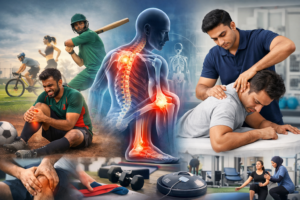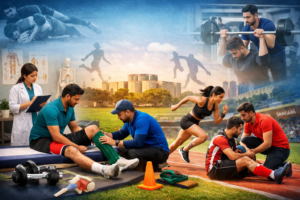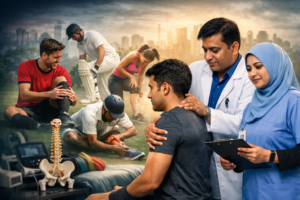
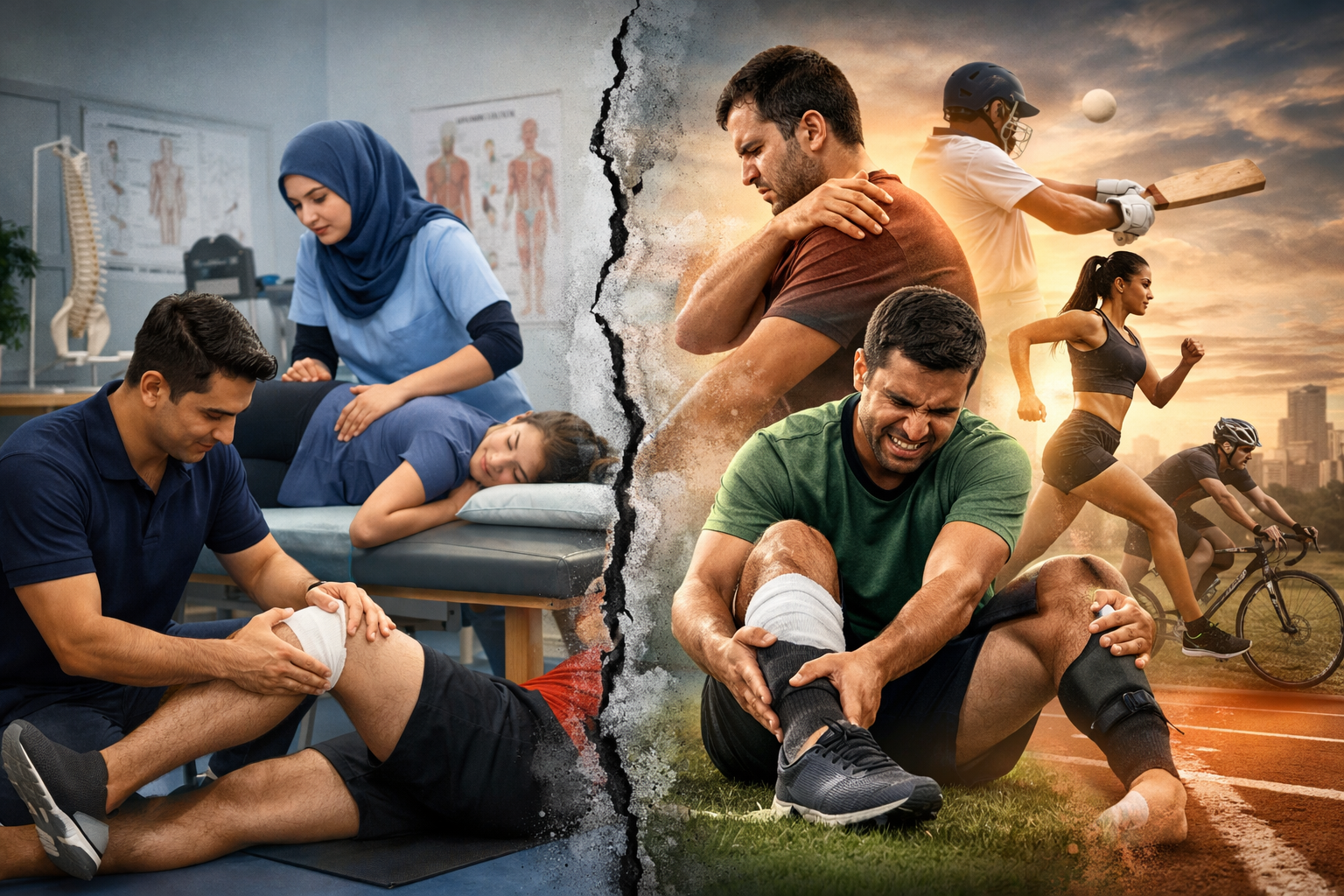
Sports injuries are becoming increasingly common in Dhaka as more people engage in recreational sports, professional athletics, gym training, and fitness activities. From football, cricket, and badminton to running, cycling, and strength training, physical activity plays a vital role in maintaining health and overall well-being. However, these activities also increase the risk of musculoskeletal injuries when performed without proper conditioning, correct technique, or adequate recovery.
Sports injuries can affect individuals of all ages from young athletes and university students to amateur sports enthusiasts and fitness-focused professionals. Common injuries include ligament sprains, muscle strains, tendon inflammation, joint instability, and overuse injuries affecting the knee, ankle, shoulder, or spine. When not treated properly, these injuries can significantly limit athletic performance, delay recovery, and sometimes lead to long-term functional problems.
In Dhaka, many sports injuries are initially treated with rest, pain medication, or temporary immobilization. While these approaches may reduce immediate discomfort, they often fail to address the underlying biomechanical causes of injury. As a result, athletes frequently experience repeated injuries, prolonged recovery periods, and reduced physical performance.
This growing concern has created a demand for specialized sports injury treatment centers that focus on accurate diagnosis, evidence-based rehabilitation, and safe return-to-sport programs. Among the centers providing advanced conservative sports rehabilitation, ASPC Manipulation Therapy Centre has emerged as one of the best sports injury treatment centers in Dhaka.
Under the clinical leadership of Dr. Mohammad Shahadat Hossain, PT, and the rehabilitation expertise of Dr. Sapia Akter, PT, ASPC provides structured, non-surgical sports injury treatment designed to restore function, rebuild strength, and prevent future injuries.
Understanding Sports Injuries from a Clinical Perspective
Sports injuries are complex musculoskeletal conditions that occur when tissues such as muscles, ligaments, tendons, joints, or bones are exposed to excessive stress or improper movement patterns. These injuries may occur suddenly during physical activity or develop gradually over time due to repetitive strain.
Acute Injuries
Acute injuries occur suddenly during sports participation. Examples include:
- Ligament sprains
- Muscle strains
- Joint dislocations
- Tendon tears
- Fractures
These injuries often result from sudden movements, collisions, improper landing, or excessive force.
Overuse Injuries
Overuse injuries develop gradually due to repetitive stress on specific tissues. Examples include:
- Tendinitis
- Stress fractures
- Shin splints
- Runner’s knee
- Tennis elbow
These injuries often occur when training intensity increases too quickly or when athletes do not allow sufficient recovery time.
A key clinical principle in sports injury treatment is understanding that pain is only a symptom, not the root problem. The real cause may involve poor biomechanics, muscle imbalance, reduced joint mobility, or faulty movement patterns. Effective treatment therefore requires a detailed functional assessment to identify the true cause of injury.
Why Choosing the Right Center Matters?
Improper management of sports injuries can delay recovery and increase the risk of chronic pain or recurrent injuries. Many athletes return to sports too early without restoring strength, mobility, and stability, which leads to repeated injury cycles.
The best sports injury treatment center in Dhaka is one that prioritizes:
Clinical Standards
- Accurate injury diagnosis
- Evidence-based rehabilitation protocols
- Progressive strength and conditioning
- Movement correction and biomechanical analysis
- Safe return-to-sport planning
At ASPC Manipulation Therapy Centre, every patient receives a comprehensive evaluation before treatment begins. This allows clinicians to design individualized rehabilitation programs tailored to the specific injury and the athlete’s activity level.
Clinical Leadership
Dr. Mohammad Shahadat Hossain, PT
Dr. Mohammad Shahadat Hossain, PT is widely respected for his expertise in advanced musculoskeletal physiotherapy and non-surgical sports injury management. With extensive clinical experience in treating athletes and physically active individuals, he has developed a strong reputation for providing structured, evidence-based rehabilitation for sports-related conditions.
His clinical approach focuses on detailed evaluation of joint mechanics, movement patterns, and muscular coordination. Rather than relying solely on imaging reports such as MRI or X-ray findings, he carefully examines how the body functions during real-life movement, daily activities, and sports performance. This functional assessment helps identify the mechanical and biomechanical factors contributing to injury.
Dr. Shahadat is particularly recognized for his ability to identify underlying biomechanical causes of sports injuries. By understanding how joints, muscles, and movement patterns interact, he is able to design treatment strategies that address the root cause of injury rather than simply managing symptoms. This approach helps improve recovery outcomes and reduces the likelihood of repeated injuries.
Another important aspect of his practice is clear communication with patients. He takes time to explain the nature of the injury, the reasons behind specific treatment strategies, and the expected stages of recovery. This patient-centered approach allows individuals to understand their condition and actively participate in their rehabilitation process. Patients appreciate his logical explanations, careful treatment planning, and ethical clinical practice. His treatment philosophy prioritizes conservative rehabilitation whenever possible, helping many patients recover without unnecessary surgical intervention. Many athletes trust Dr. Mohammad Shahadat Hossain, PT for guiding them safely through injury recovery and helping them return to sports with improved strength, mobility, and confidence.
Dr. Sapia Akter, PT
Recovery from sports injuries requires a carefully structured rehabilitation program that gradually restores strength, flexibility, coordination, and confidence. Effective rehabilitation goes beyond simply reducing pain; it focuses on rebuilding the body’s functional capacity so that patients can safely return to their normal activities and athletic performance.
Dr. Sapia Akter, PT plays a crucial role in guiding patients through this rehabilitation process. With extensive experience in physiotherapy and musculoskeletal rehabilitation, she is dedicated to helping patients regain physical function through well-planned and progressive exercise programs.
Her rehabilitation philosophy emphasizes gradual progression and patient safety. Each stage of rehabilitation is designed to strengthen injured tissues without placing unnecessary stress on healing structures. This careful progression helps prevent complications and reduces the risk of re-injury. Dr. Sapia Akter develops individualized rehabilitation programs tailored to the specific needs of each patient. These programs typically include strength training, functional movement training, balance/coordination exercises, and sport-specific conditioning.
In addition to treating athletes, Dr. Sapia Akter provides special attention to individuals who may require modified rehabilitation strategies, including female athletes, elderly patients, and beginners who are new to physical training. Her patient-centered approach ensures that rehabilitation programs are both safe and effective for different age groups and activity levels. Her ultimate goal is not only to help patients recover from injury but also to prevent future injuries and improve overall physical performance.
10-Step Treatment Approach at ASPC
1. Clinical Assessment
Thorough clinical assessment including history, symptom behavior, joint mobility, muscle strength, and functional movement screening.
2. Acute Injury Management
Focuses on reducing pain, swelling, and tissue irritation during the early phase through protection and modification.
3. Manual Therapy
Includes joint mobilization, soft tissue therapy, and myofascial release to restore normal mechanics and reduce pain.
4. Strengthening
Progressive strengthening targeting core, hip, knee, and shoulder stabilizers to improve joint stability.
5. Flexibility Training
Stretching routines to improve muscle flexibility, restore range of motion, and reduce restrictions.
6. Proprioception
Single-leg balance and dynamic drills to restore neuromuscular control and precise body movement.
7. Sport-Specific Rehab
Mechanics training specifically for running, jumping, landing, or throwing depending on the athlete’s sport.
8. Movement Correction
Training to improve lifting technique and movement efficiency, reducing unnecessary stress on joints.
9. Home Exercise Program
Customized plans designed by Dr. Sapia Akter, PT to maintain progress achieved in the clinic.
10. Return-to-Sport Assessment
Functional testing of strength symmetry and endurance to ensure the athlete is ready for full competition.
Patient Experience and Outcomes
Patients receiving sports injury treatment at ASPC frequently report positive experiences due to the center’s patient-centered approach. Athletes appreciate the clear explanations provided during assessment and the structured rehabilitation programs designed for their specific needs.
Many patients report that they finally understand the true cause of their injury and learn how to prevent future problems. The supportive rehabilitation environment helps patients regain confidence in their physical abilities.
Long-Term Benefits
- Faster and safer recovery from injury
- Restoration of joint mobility and strength
- Improved balance and coordination
- Reduced risk of recurrent injuries
- Enhanced athletic performance
- Improved confidence during physical activity
- Safe return to competitive sports
- Reduced dependence on pain medication
- Better overall physical fitness and resilience
Patient satisfaction is an important indicator of successful sports injury rehabilitation. Athletes treated at ASPC often report that they receive individualized attention and clear explanations about their injury and recovery plan. The combination of manual therapy, progressive rehabilitation exercises, and education empowers patients to take an active role in their recovery.
Comparison with Other Centers in Dhaka
Sports injury treatment services are available at several hospitals and rehabilitation centers across Dhaka. Well-known institutions such as CRP – Centre for the Rehabilitation of the Paralysed, the National Institute of Traumatology and Orthopaedic Rehabilitation (NITOR), Square Hospital Ltd., Labaid Specialized Hospital, Ibn Sina Hospital, Popular Diagnostic Centre Ltd., and Bangladesh Spine & Orthopaedic Hospital provide orthopedic and physiotherapy services for a wide range of musculoskeletal conditions.
Why Choose ASPC?
While large hospitals play an important role in healthcare infrastructure, ASPC offers distinct advantages for sports-specific care:
- Specialized Focus: Dedicated primarily to musculoskeletal and non-surgical rehabilitation rather than a general medical system.
- In-Depth Assessment: Every patient undergoes detailed evaluation including posture, movement, and joint mechanics examination.
- Active Rehabilitation: ASPC integrates manual therapy and strengthening rather than relying solely on passive machines (ultrasound/electrical stimulation).
- Expert Supervision: Direct guidance by specialists Dr. Mohammad Shahadat Hossain, PT and Dr. Sapia Akter, PT.
- Prevention: Strong emphasis on educating patients to maintain long-term musculoskeletal health.
Conclusion
Sports injuries are complex conditions that require accurate diagnosis, structured rehabilitation, and professional supervision to ensure full recovery. Temporary solutions such as rest, pain medication, or short-term therapy may reduce symptoms, but they often fail to address the biomechanical and functional causes of injury. For athletes and physically active individuals, effective treatment must focus on restoring joint stability, muscle strength, movement efficiency, and overall physical performance.